
Writing Professional Emails in German: Templates and Cultural Etiquette
Writing a professional email in German is about more than choosing the right words. Your grammar may…


Australia +61 (0) 3 8400 4713 New Zealand +64 (0) 9 9097866

Australia
+61 (0) 3 8400 4713
New Zealand
+64 (0) 9 9097866

Writing a professional email in German is about more than choosing the right words. Your grammar may…
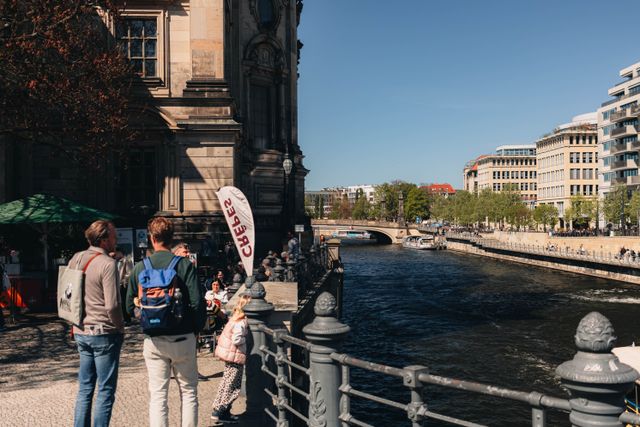
Asking for directions in German is useful even when you have maps on your phone. You may…

German is often presented to learners as a single national language with a single standard form. In…

Saying sorry in German involves more than memorising one expression and using it everywhere. German speakers choose…

When one thinks of fine international cuisine, Germany most likely does not immediately spring to mind. True,…

Should you find yourself conducting business affairs with colleagues or clients in Germany, you probably know that…
With all the interesting languages out there, you could be learning, you might wonder why you should choose German in the first place. To answer that question, here are some of the reasons why you should start learning German today.
As you probably know, Germany has some of the best universities in Europe, so if you’re planning on studying abroad, learning German is one of the smartest things you can do. In addition to offering some of the best education in the world, German universities are known for having very low or non-existent tuition fees, so if you manage to enter any of them, you won’t have to worry about student debt. Although there are many great institutions where you’ll be able to study once you learn German, some of the best include the Technical University of Munich, Ludwig-Maximilians University and Ruprecht-Karls University.
Are you planning on studying in Germany? If so, then check out the Language for Exam Preparation Courses we offer, which will help you pass any entry exam and understand all your classes at university.

Learning German will open many doors for you to get more familiarised with the works of some of the world’s best writers, musicians, artists and philosophers. Once you become bilingual, you’ll be able to read Goethe, Herman Hesse, Kafka, and many others in their original language, as well as appreciate more deeply the music of top composers like Bach, Mozart and Beethoven, so if you want to expand your knowledge of general culture, don’t hesitate to learn this fascinating language.

Once you can communicate fluently in German, you’ll be able to apply for well-paid corporate positions in top German companies that operate in Australia, like BMW Group, Siemens, and Bayer. Additionally, you’ll become an asset for big local companies like Commonwealth Bank of Australia, BHP Group and CSL Limited, which are always looking for bilinguals who can help them improve their economic relations with German companies, so you’ll get a lot more job offers no matter where in Australia you live. Alternatively, if you own a business or are planning on starting one soon, speaking German will increase the chances of accessing international markets, as well as attracting foreign clients, which can be a great way to ramp up your sales and become a much more successful business person.
Learning German is also key to doing business in Germany. Want to know more about this? Check out some of these articles from our blog:
”I have only positive things to say about my instructor and lessons! Brad was the perfect instructor for me and gets an A+ rating! He is an excellent teacher: Professional, knowledgeable of the German language & culture, personable, responsible, kind, and patient! He really helped me to improve speaking, reading, and writing in German, as well as to learn more verb tenses, vocabulary, and to become comfortable conversing about everyday life in the German language. I am so grateful to Language Trainers for the opportunity you gave me to help further my German language learning! It was truly a wonderful experience taking lessons from Brad!”
Shawney Garbe - German course in Birmingham (Alabama)
German is one of the best languages you can learn if you like travelling, as it will allow you to get by in countries like Austria, parts of Italy, Liechtenstein, Luxembourg, Switzerland, and of course, Germany. On top of that, German is the second most-spoken language in Europe, as it has served as a lingua franca for centuries all around the continent. This means you’ll be able to communicate with millions of Europeans much more easily, especially in eastern European countries like the Czech Republic, Poland and Hungary.

If you’re now ready to start your journey to fluency in German, you now have to make another decision, and that’s whether you want to do it on your own or whether you want to start a language course with a qualified tutor. If you’re not sure what you should do, take a look at the comparison between these two options.
Want to learn German but don’t know how to plan your own lessons? Don’t worry, because if you book a lesson with us, one of our language professionals will tailor lessons based on your language goals and interests. Still not convinced? Then check out some of the most important reasons why you should study with a tutor.
Although many learners attempt to study German on their own because it’s completely free, there are a few things you should take into consideration before you decide to try this yourself. First, you need to be really disciplined to make any progress, which can be difficult without someone guiding you through the process. Secondly, keep in mind that searching for free updated materials to design your lessons won’t be as easy as it sounds and will be very time-consuming. Thirdly, unless you have German native friends, it will be pretty challenging to get the weekly practice time you would get with a teacher, so you won’t be able to put your skills to the test very often. In short, even though learning on your own means you’ll be saving money, unless you really commit to it it’s really easy to end up unmotivated and frustrated in the long run.
If you’ve decided to become fluent in German and want some useful tips to make the best use of your time, don’t miss out on the following tips and recommendations.
As you probably know, it can be pretty tricky to remember which German nouns are masculine, which are feminine and which are neuter, so something you can do from the beginning is to learn new nouns with their corresponding article. Instead of learning the German word for time, which is Zeit, on its own, it’s much more efficient if you learn it as Die Zeit, which will help you remember that it is a feminine noun. To help you start learning new German nouns, here’s a list with some common ones divided by grammatical gender.
German language, like English, has many useful modal verbs you can learn. You use them in English all the time, every time you make sentences with the verbs can, must, might, and may to express ideas of possibility, permission, desire and obligation, and if you learn how to conjugate them in German, you’ll be able to make a wide variety of sentences, which will really improve your fluency. Once you master them, you’ll be able to say things like:
| I can play tennis. | Ich kann Tennis spielen. |
| I have to play tennis. | Ich muss Tennis spielen. |
| I can go to school. | Ich kann zur Schule gehen. |
| I have to go to school. | Ich muss in die Shule gehen. |
| I can learn German. | Ich kann Deustch lernen. |
| I have to learn German. | Ich muss Deutsch lernen. |
In addition to learning new vocabulary and working on your grammar, it’s really important that you immerse yourself in German culture as early as possible. There are many entertaining ways you can do this, so choose whichever you prefer.
Learning new words and phrases in another language can be challenging, especially at the beginning. Fortunately, you can use your own imagination to create useful mental images that help you link new German words with their meaning. Don’t believe us? Then take a look at these fun mnemonic techniques you can start using right now.
Are you struggling to make yourself understood when you speak to natives? If so, you might have to work on improving your pronunciation. To help you out, here are some resources you can use in your free time to improve the way you sound.
If you’ve just started learning German and you can’t say much, take a look at these survival German phrases that will come in handy on any trip to Germany.
| German | English |
|---|---|
| Hallo! | Hello! |
| Danke | Thank you |
| Auf Wiedersehen | Goodbye |
| Bitte | Please / You're welcome |
| Ja / Nein | Yes / No |
| Vielleicht | Maybe |
| Entschuldigung | Excuse me |
| Guten Tag / Morgen / Abend | Good day / Morning / Evening |
| Ich heiße… | My name is… |
| Wie heißen Sie? | What's your name? (formal) |
| Wie heißt du? | What's your name? (informal) |
| Woher kommst du? | Where are you from? |
| Ich komme aus… | I'm from… |
| Wie geht es dir? | How are you? |
| Ich kann nicht (so gut) Deutsch sprechen | I can't speak German very well |
| Sprichst du Englisch? | Do you speak English? |
| Kannst du das bitte wiederholen? | Could you repeat that? |
| Nett Sie kennenzulernen | Pleased to meet you |
| Wie viel kostet…? | How much is…? |
| Haben Sie…? | Do you have…? |
| Wo finde ich…? | Where can I find…? |
| Wo sind die Toiletten, bitte? | Where are the restrooms, please? |
| Kann ich mit Kreditkarte zahlen? | Can I pay by credit card? |
| Kann ich bar bezahlen? | Can I pay in cash? |
| Eine Fahrkarte nach … bitte | One ticket to… please |
| Was kostet eine Fahrkarte nach …? | How much is a ticket to…? |
| Wann fährt der nächste Bus/Zug nach …? | When does the next bus/train leave to…? |
| Sind noch Zimmer frei? | Do you have any rooms available? |
| Wie viel kostet ein Einzelzimmer? | How much is a single room? |
| Wie viel kostet ein Doppelzimmer? | How much is a double room? |
| Ich möchte auschecken | I'd like to check out |
As you can see, learning German will improve your life in many wonderful ways, so what are you waiting for to get started? Just send us a quick enquiry now, and we’ll contact you as soon as we can to find out exactly what you are looking for in a language course. Then, we’ll pair you up with an excellent tutor who can help you achieve all your language goals!
Want some extra tips and recommendations? Don’t forget to subscribe to our YouTube channel and like our Facebook page.