
Many learners begin Spanish with the same question: What is the best way to learn? Some people swear by grammar books. Others say you should only listen to podcasts. Others insist that the only real method is conversation from day one.
The truth, at least from what I have seen after many years teaching Spanish, is that there is no single best way to learn Spanish for everyone. There are better and worse methods, of course, but the most efficient path depends a lot on how each learner processes information, reacts to mistakes, remembers new words, and builds confidence in conversation.
This is why two students can be equally motivated, take the same number of lessons, and still progress at very different speeds. One learner may need to see a verb pattern written down before it feels safe to use. Another may need to hear the rhythm of a phrase several times before it becomes natural. Another may understand everything perfectly on paper, but freeze the moment they have to speak.
Learning styles are not rigid boxes. Nobody is only visual, only auditory, only analytical, or only communicative. Research on language learning styles also reminds us that many learners use several modalities at once, and that these preferences should be treated as tendencies rather than fixed categories.
Still, those tendencies matter. When your study method matches the way your mind naturally absorbs language, Spanish stops feeling like a wall and starts feeling like a door. You reduce friction. You remember more. You hesitate less. And, little by little, Spanish becomes less of a subject you are studying and more of a language you can actually use.
→Sign Up Now: Free Trial Spanish Lesson With a Native Teacher!←
Why Do Some People Learn Spanish Faster Than Others?
Motivation gets a student through the door, but it does not automatically decide how fast they move once they are inside. I have taught students in Argentina and Spain who were equally committed, equally intelligent, and equally serious about learning Spanish, yet their progress unfolded in very different ways.
The difference was not usually talent. It was fit.
Some learners progress faster because their study habits match the way their brain naturally processes information. They are not necessarily studying more hours. They are studying through the right channel. A visual learner who can see the pattern may suddenly relax. An auditory learner who hears the rhythm may start remembering phrases without forcing them. A communicative learner who practises through real situations may learn more from one messy role play than from a page of perfect written exercises.
I sometimes explain this with a simple image: your brain is like a radio, and Spanish is a broadcast happening on many frequencies at once. Grammar is one frequency. Sound is another. Visual memory, emotion, context, repetition, social interaction, and correction are all part of the signal. When you find the frequency that comes through clearly for you, there is less static.
That does not mean you should only study in one way. It means your strongest learning channel can become the starting point. From there, you can build bridges toward the skills that feel harder. For example, an analytical learner may use grammar rules to feel secure, but still needs low-pressure speaking practice. A communicative learner may speak bravely, but still benefits from short moments of structure so mistakes do not become permanent.
Research on Spanish learners also supports the importance of learning strategies. In one empirical study of students of Spanish, social strategies were the most commonly used, followed by metacognitive and cognitive strategies, while memory and affective strategies were less frequent. That matters because it shows that learning Spanish is not only about absorbing information; it is also about how learners interact, plan, monitor themselves, manage emotion, and choose strategies.
What Are Cognitive Learning Styles in Language Learning?
Cognitive learning styles are the broad ways people tend to understand, organise, and remember new information. In simple terms, they describe the kind of “doorway” that lets Spanish enter your mind with the least resistance.
Some learners need to see Spanish. They want written examples, colours, subtitles, charts, and clear visual patterns. Some need to hear it. They remember pronunciation, rhythm, intonation, and repeated phrases. Some need to analyse it. They feel more confident when they understand the logic behind a structure. Others need to use it immediately. They learn by speaking, reacting, making mistakes, and adjusting in real time.
These styles are not labels you carry forever. They are not a personality test, and they should never become an excuse to avoid difficult skills. A visual learner still needs to listen. An auditory learner still needs to read and write. A communicative learner still needs grammar. An analytical learner still needs to stop analysing at some point and speak.
The useful question is not “What type of learner am I?” as if there were only one answer. The better question is: “Which methods help me understand Spanish faster, remember it longer, and use it with more confidence?”
Once you answer that honestly, your learning becomes more efficient. You stop copying routines that worked for someone else and start building a way of studying Spanish that actually fits you.
What Type of Spanish Learner Are You?
Most learners are not one single type of learner all the time. You might need written notes for grammar, audio repetition for pronunciation, and real conversation to build confidence. Still, recognising your strongest tendencies can help you choose Spanish activities that feel more natural and less frustrating.
Research on language learning styles makes this point clearly: visual, auditory, and tactile or hands-on preferences are not absolute, and many learners use a combination of different modalities. That is exactly what I see in lessons too. The goal is not to put yourself in a box. The goal is to understand which doorway helps you enter the language with less resistance.
Visual Learners: Learning Spanish Through Patterns and Written Cues
Visual learners usually feel more comfortable when they can see how Spanish works. They often benefit from written examples, colour-coded notes, grammar charts, subtitles, timelines, and vocabulary maps. A visual learner may understand the difference between el problema [the problem] and la solución [the solution] more easily if masculine and feminine nouns are marked in different colours.
This type of learner also tends to enjoy seeing patterns side by side. For example, comparing pretérito indefinido and imperfecto on a timeline can make the contrast much clearer than simply hearing an abstract explanation. Ayer fui al cine [Yesterday I went to the cinema] and Cuando era niño, iba al cine los domingos [When I was a child, I used to go to the cinema on Sundays] become easier to separate when the learner can literally see one action as completed and the other as repeated or ongoing.
Auditory Learners: Learning Spanish Through Sound and Rhythm
Auditory learners often need to hear Spanish before it feels real. They respond well to repetition, pronunciation practice, songs, podcasts, dialogues, and conversation. They may remember a phrase because of its rhythm rather than because they consciously memorised the grammar.
These learners often notice when something “doesn’t sound right” before they can explain why. A student might correct yo gusto el café to me gusta el café [I like coffee] simply because the second version sounds familiar after hearing it many times. For auditory learners, shadowing native speakers, repeating useful chunks, and listening to short clips several times can be more powerful than staring at a long written list.
Analytical Learners: Learning Spanish Through Rules and Structure
Analytical learners want the blueprint. They usually feel safer when they understand the rule behind the sentence, the pattern behind the verb, or the reason why Spanish uses one structure instead of another. They may enjoy grammar explanations, sentence breakdowns, conjugation logic, and contrastive examples.
This can be a real strength. An analytical learner might make excellent progress with topics like ser vs estar, direct and indirect object pronouns, or the difference between por and para, because they genuinely want to understand the mechanics. The challenge is that analysis can become a brake. If a learner checks every verb, agreement, preposition, and tense before speaking, the conversation loses energy. For these students, the key is to use rules as a support, not as a customs checkpoint that every sentence must pass before leaving the mouth.
Communicative Learners: Learning Spanish Through Real Interaction
For communicative learners, conversation in Spanish is key because they make progress by using the language in real exchanges, not by waiting until every sentence is perfect. They often make progress through role plays, travel situations, problem-solving tasks, and trial and error. They are usually less afraid of imperfection because their main goal is connection.
A communicative learner may say something with the wrong tense, gesture with their hands, laugh, correct themselves, and keep going. From a strict grammar perspective, the sentence may not be perfect. But from a learning perspective, something very important is happening: the learner is staying inside the conversation. That momentum matters.
These learners often benefit from activities like booking a table, explaining a problem at a hotel, asking for directions, giving an opinion, or telling a short story from their week. Later, the teacher can bring structure back in and refine the grammar. But the first doorway into Spanish, for this type of learner, is usually interaction.
How to Learn Spanish More Efficiently Based on Your Learning Style
“Efficient learning is not about comfort only; it is about using comfort as a bridge toward progress.” – Juan Manuel Terol
Learning Spanish more efficiently does not mean finding one perfect method and using it forever. It means understanding which kinds of activities help Spanish enter your mind with the least resistance, and then using those strengths to support the areas that feel harder.
In Learning Style in Language Learning Classroom, Silitonga, Pinem, Simbolon, Lingga, and Saragih (2020) quote Hunt’s definition of learning style: “Learning Style describes how a student learns, not what he has learned.” That distinction matters. Two learners may know the same number of verbs, attend the same number of lessons, and have the same motivation, but the path that helps them actually absorb Spanish may be completely different.
This is why I do not think learners should copy a study routine just because it worked for someone else. A visual learner may need to prepare short written prompts before speaking, so conversation feels less chaotic. An auditory learner may benefit from reading a transcript while listening to the same dialogue, so sound and text reinforce each other. A communicative learner may need real interaction first, followed by a short grammar review to prevent repeated mistakes from becoming habits.
The goal is balance. Use your strongest style for most of your study time, because that keeps motivation and confidence alive. But do not hide inside that strength. If you love grammar, you still need conversation. If you love conversation, you still need correction. If you love listening, you still need to produce language yourself. Efficient learning is not about comfort only; it is about using comfort as a bridge toward progress.
The Best Spanish Language Activities for Different Learning Styles
The best Spanish activities are not the same for everyone. A useful activity is one that helps you understand Spanish, remember it, and use it again in a real situation, including small moments of learning Spanish during daily routines. For some learners, that means seeing patterns. For others, it means hearing rhythm. For others, it means analysing structure or jumping into conversation.
This also connects with research on Spanish learners. In his 2016 empirical study, Sergio Di Carlo found that among students of Spanish, “social strategies seemed to be the ones most commonly used, followed by metacognitive and cognitive strategies.” For me, that is an important reminder that Spanish progress is not only about memorising words. Learners also need interaction, self-awareness, planning, reflection, and meaningful use.
The Best Spanish Language Activities for Visual Learners
Visual learners often need to turn Spanish into something they can see before they feel ready to use it. Good activities include colour-coded verb charts, illustrated vocabulary maps, grammar timelines, flashcards with images, subtitles, sentence diagrams, and written comparison tables.
One activity that works especially well is a Spanish tense timeline. The teacher chooses three or four related sentences that use different tenses and places them on a horizontal line: past, repeated past, present, near future. For example: ayer fui al centro [yesterday I went downtown], cuando era niño, iba al centro con mi madre [when I was a child, I used to go downtown with my mother], hoy voy al centro [today I am going downtown], and mañana voy a ir al centro [tomorrow I am going to go downtown].
The student then marks what each tense is doing. Fui can be shown as one completed dot in the past. Iba can be shown as a repeated or extended line. Voy sits in the present. Voy a ir points forward. After that, the student creates their own version with a different verb, such as comer, estudiar, or trabajar.
This activity fits visual learners because it gives them a map. Instead of hearing a long explanation about tense and aspect, they can see why fui and iba are not interchangeable. The visual structure reduces uncertainty, and once the pattern is clear on paper, the learner is usually more willing to try it in speech.
The Best Spanish Language Activities for Auditory Learners
Auditory learners often need to hear Spanish repeatedly before it feels natural. Good activities include shadowing native speakers, listening to podcasts, repeating short dialogues, recording themselves, practising pronunciation aloud, using songs, and reading a text while listening to the audio.
A strong activity for this type of learner is listen, shadow, record, compare. The student chooses a short clip of natural Spanish, ideally under one minute. It could be a podcast extract, a short video, or a dialogue prepared by the teacher. First, they listen only for the general meaning. Then they listen again with the transcript. After that, they choose three or four useful phrases and repeat them aloud, trying to copy the rhythm, pauses, and intonation.
The next step is recording themselves saying the same lines. They do not need to sound exactly like a native speaker, but they compare their recording with the original and notice specific differences: maybe the vowels are too closed, maybe the rhythm sounds too English, or maybe they are stressing the wrong syllable. Then they repeat the same phrases again with one small correction.
This works well for auditory learners because it treats Spanish as sound before it treats it as a written system. These learners often develop a strong instinct for what “sounds right.” They may not immediately explain why me parece que… [it seems to me that…] sounds better than another structure, but after hearing and repeating it enough, the phrase becomes available in conversation without so much conscious effort.
The Best Spanish Language Activities for Analytical Learners
Analytical learners usually benefit from grammar breakdowns, pattern recognition, sentence transformation exercises, contrastive examples, error analysis, and short rule-based practice followed by conversation. They like understanding why Spanish works the way it does, and that can be a real strength.
A useful activity for analytical learners is rule, contrast, transformation, conversation. The teacher starts with a specific contrast, such as por and para. Instead of giving a huge list of uses, the lesson begins with a small, manageable pair: trabajo por dinero [I work for money] and trabajo para una empresa [I work for a company]. The student identifies the logic: por explains a reason or exchange, while para points to a destination, goal, or recipient.
Then the student transforms sentences. Estudio español ___ mi trabajo becomes Estudio español para mi trabajo [I study Spanish for my job]. Lo hice ___ ti becomes Lo hice por ti [I did it for you]. After a few controlled examples, the teacher moves quickly into a real speaking task: “Tell me three reasons why you study Spanish and three situations where you need Spanish.” Now the learner has to use por and para in meaningful speech, not just in a worksheet.
This activity fits analytical learners because it respects their need for structure. They get the rule, the contrast, and the logic. But it also protects them from the biggest analytical trap: staying inside explanation forever. The final conversation step forces the grammar to become practical. The rule gives confidence, but the speaking task gives the rule a real purpose.
The Best Spanish Language Activities for Communicative Learners
Communicative learners often learn best through role plays, guided conversation, problem-solving tasks, travel simulations, debate prompts, storytelling, and real-life missions such as booking a table, asking for help, or explaining a problem.
One activity I like for communicative learners is a real-life problem scenario. The teacher gives the student a situation: “You are staying at a hotel in Madrid. The air conditioning is not working, you have an early meeting tomorrow, and you need a solution.” The student has to speak with the receptionist, explain the problem, ask for help, and react to different answers.
At first, the teacher lets the conversation flow without interrupting too much. The student might say something imperfect like el aire no trabaja instead of el aire acondicionado no funciona [the air conditioning isn’t working], or quiero cambiar habitación instead of me gustaría cambiar de habitación [I would like to change rooms]. That is fine at the first stage. The priority is to keep the interaction alive.
After the role play, the teacher selects two or three useful corrections and turns them into better phrases: El aire acondicionado no funciona, ¿Habría posibilidad de cambiar de habitación? [Would there be a possibility of changing rooms?], Tengo una reunión temprano mañana [I have an early meeting tomorrow]. Then the student repeats the same scenario, this time using the upgraded language.
This fits communicative learners because they need Spanish to feel like a human exchange, not an isolated exercise. They learn through urgency, context, tone, and reaction. The correction comes after the interaction, so it improves accuracy without killing fluency. That is the balance these learners need: first connection, then refinement.
How Spanish Teachers Can Adapt to Different Learning Styles
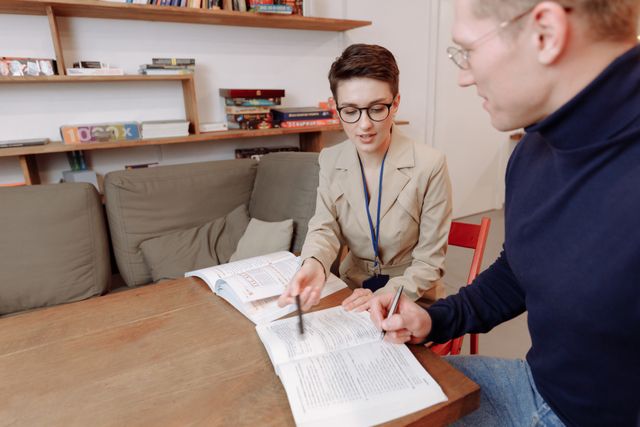
Spanish teachers can adapt to different learning styles by observing how each student reacts to an activity, not just whether they get the answer right. A student who understands a grammar rule on paper but freezes in conversation does not need the same kind of support as a student who speaks freely but repeats the same mistakes. This is why a teacher’s job is not only to explain rules. A good teacher also reads how a learner operates: how they respond to correction, how much structure they need, when they lose confidence, and which activities make Spanish start to click.
In his 2016 paper, The Use of Learning Strategies Among Learners of Spanish: An Empirical Study, Sergio Di Carlo argues that “strategic teachers are needed who have become aware of the complex cognitive and metacognitive processes that are mobilized to learn.” That idea feels very true to me. Teaching Spanish well is not just about having a list of exercises. It is about understanding what is happening inside the learner while they are trying to process the language.
The same activity can usually be adapted to different styles. Take a simple restaurant role play. For a visual learner, I might first provide a written menu, colour-code useful phrases, and let them prepare a small phrase map with me gustaría… [I would like], ¿podría…? [could I…?], and la cuenta, por favor [the bill, please]. For an auditory learner, I might begin with a short model dialogue, ask them to repeat the waiter’s phrases aloud, and focus on rhythm and intonation before they perform the scene. For an analytical learner, I might briefly explain why me gustaría sounds softer than quiero, and then ask them to transform direct requests into more polite ones. For a communicative learner, I might start the role play almost immediately, let the interaction flow, and give focused corrections afterwards.
The content is the same: ordering food in Spanish. What changes is the path into the activity. That is where personalised teaching matters. A teacher can adjust the amount of preparation, the type of input, the pacing, the correction style, and the homework so that the learner is challenged without feeling blocked. Over time, this helps students not only learn Spanish, but also understand how they learn best.

Learn Spanish in a Way That Fits You
Learning Spanish becomes much more efficient when the course is built around the person in front of the teacher. At Language Trainers, lessons do not follow a pre-arranged plan that every student receives in the same order. The course is built around your needs, both in terms of your learning style and your real goals.
For example, imagine a student who needs Spanish for an upcoming job interview. A fixed lesson plan might spend that week on generic vocabulary or a grammar topic that is not immediately useful. A personalised Spanish course would do something different. The teacher could build the lesson around interview questions, professional vocabulary, polite answers, confidence-building phrases, pronunciation practice, and role plays that recreate the pressure of the actual interview.
The same lesson can also be adapted to the student’s learning style. A visual learner might prepare written answer frameworks and colour-code useful connectors like además [in addition], por eso [that’s why], and en mi experiencia [in my experience]. An auditory learner might practise answering questions aloud and record themselves to improve rhythm and pronunciation. An analytical learner might work on sentence structure and verb accuracy before doing the role play. A communicative learner might begin with a mock interview and refine the language afterwards.
This is where a native teacher can make a real difference. They can correct unnatural phrasing, explain cultural expectations, adjust the level of formality, and help the student sound confident without sounding rehearsed. Spanish is not only about having the right words. It is also about tone, timing, body language, and choosing the phrase that fits the situation.
That flexible, human approach is what many learners value most. As Zhane Ochoa from Darwin, who took a 50-hour Spanish course, shared: “In all honesty, the course has been phenomenal. My trainer is extremely captivating in personality and adaptable to the learning environments we often find ourselves. It’s a fruitful experience and I always leave feeling better and more confident in my ability to speak Spanish.”
Would you like to learn Spanish in a way that fits how you think, speak, and live? Whether you’re looking for Spanish courses in Darwin, Sydney, Melbourne, or anywhere else, contact Language Trainers and ask about a personalised Spanish course built around your goals.
→Sign Up Now: Free Trial Spanish Lesson With a Native Teacher!←
5 Questions About Spanish Learning Styles and Faster Progress
1. What is the best way to learn Spanish efficiently?
The best way to learn Spanish efficiently is to use study methods that match how you naturally process information, while still practising all the main skills: speaking, listening, reading, writing, grammar, vocabulary, and pronunciation. For example, if you are a visual learner, charts and written examples may help you understand faster. If you are more communicative, role plays and real conversations may help Spanish feel alive. The key is not to copy someone else’s routine, but to find the mix of activities that helps you remember, use, and enjoy Spanish consistently.
2. Do Spanish learning styles really matter?
Yes, but they should not be treated as rigid labels. Learning styles matter because they can explain why one method feels clear and useful to one learner, but frustrating or slow to another. A grammar table might help an analytical learner, while an auditory learner may need to hear the same structure in a dialogue before it makes sense. That said, nobody learns through only one style. The most effective learners use their strengths as a starting point, then gradually train the skills that feel less natural.
3. How do I know if I am a visual, auditory, analytical, or communicative learner?
Pay attention to what creates the least friction. If you remember Spanish better after seeing charts, subtitles, written examples, or colour-coded notes, you may lean visual. If pronunciation, songs, podcasts, repetition, and rhythm help you remember, you may lean auditory. If you feel safer when you understand the rule behind the sentence, you may be analytical. If you learn fastest by speaking, role-playing, making mistakes, and correcting yourself in context, you may be more communicative. Most learners are a combination, so the real question is which activities help you make progress without draining your confidence.
4. Can I improve Spanish faster if I change my study method?
Yes, changing your study method can make a big difference if your current routine does not match how you learn best. If you spend hours memorising isolated vocabulary but forget it in conversation, you may need to practise words inside real phrases or situations. If you understand grammar exercises but freeze when speaking, you may need more guided conversation. If listening feels impossible, you may need transcripts, repetition, and shorter audio clips instead of long podcasts. Faster progress often begins when you stop forcing a method that does not suit you and start adapting your practice more intelligently.
5. How can a Spanish teacher adapt lessons to my learning style?
A good Spanish teacher can adapt the same topic in different ways depending on how you learn. For a visual learner, a lesson on restaurant Spanish might include a written menu, phrase map, and colour-coded expressions. For an auditory learner, it might begin with a model dialogue and pronunciation practice. For an analytical learner, the teacher might explain why me gustaría sounds softer than quiero. For a communicative learner, the teacher might start with a role play and give corrections afterwards. The topic is the same, but the route into the language changes. That is what makes personalised lessons more effective.