
How to Say Sorry in Italian: Apologies for Every Situation
Italians generally value apologies that feel sincere, appropriate to the relationship, and proportionate to what happene...


Australia +61 (0) 3 8400 4713 New Zealand +64 (0) 9 9097866

Australia
+61 (0) 3 8400 4713
New Zealand
+64 (0) 9 9097866

Italians generally value apologies that feel sincere, appropriate to the relationship, and proportionate to what happene...

Italian idioms are a huge part of daily conversation. According to a study by the University of…

The most important meal you’ll have in Italy will be your business lunch, or more likely, lunches….

You’ve been working hard and think you might be on the verge of a raise, your boss…

There’s no denying that Italians know how to live life to the fullest. They enjoy good food,…
Are you feeling smug because you know how to order pasta in Italian? That might be enough…
The first thing you should do in order to find the motivation you need to study Italian is to find out about all the benefits it can bring to your life. To make it easier for you, here are some of the reasons why you should start learning Italian today.
There’s a reason why millions of people flock to Italy every year, and that’s because it’s one of the most beautiful countries in the world. Known for its impressive architecture, delicious cuisine, and sophisticated art, Italy has something for everyone. Once you master the language, you’ll be able to move through the streets of Rome, Florence or Milan like a true native, befriend locals and get to know locations that are usually kept secret from most tourists. Moreover, you’ll have a newly found respect for the local culture, as you’ll be able to understand the different celebrations, traditions and customs that make this country so unique, so what are you waiting for to get started?

Rome

Florence

Venice

Torino

Tropea
In addition to visiting Italy, learning this language will come in handy to get by in other parts of Europe, such as Switzerland, certain parts of Slovenia, and Croatia, so if you love travelling, studying Italian is a really smart choice. It can even help you understand countries where they speak other Romance languages like French, Portuguese or Spanish, as these have many similarities with Italian, so you’ll be able to make yourself understood in most of the continent without any difficulties.
”Our instructor helps us immensely in understanding and overcoming so many of the nuances that are present in the Italian language.”
Steve Meyer - Italian course in Las Vegas
If you’re currently in between jobs and are tired of only being eligible for the same low-paying positions, learning Italian is one of the smartest things you could do to reverse this situation. Once you can speak Italian confidently, you’ll be able to apply for great positions in some of the best Italian companies that operate from Australia, such as Saipem, Enel and Luxottica, or get a high-paying job in some of the multinationals that are constantly looking for bilinguals to help them expand abroad. On the other hand, if you own a business, speaking Italian will allow you to attract more clients who are part of the large foreign-born community, as well as take advantage of the successful economic relations between Australia and Italy, which in 2019 alone accounted for more than 11.1 billion dollars in bilateral trade.
One of the biggest misconceptions about the Italian language is that it’s a tough language to master, especially for English speakers. However, this is far from the truth, as with a little effort, anybody can become a fluent Italian speaker. In fact, according to the American Foreign Service Institute, Italian is one of the easiest Romance languages for English speakers to learn, so it can be a great language choice if you’ve never studied a foreign language before. Nevertheless, there are a couple of things you should do to ensure your success, so if you want to become a proficient speaker, take a look at the following recommendations.
If you do all these things, you’ll master the language in no time. Need help finding a suitable tutor? Then simply contact us, and we’ll pair you up with one of our native Italian teachers.
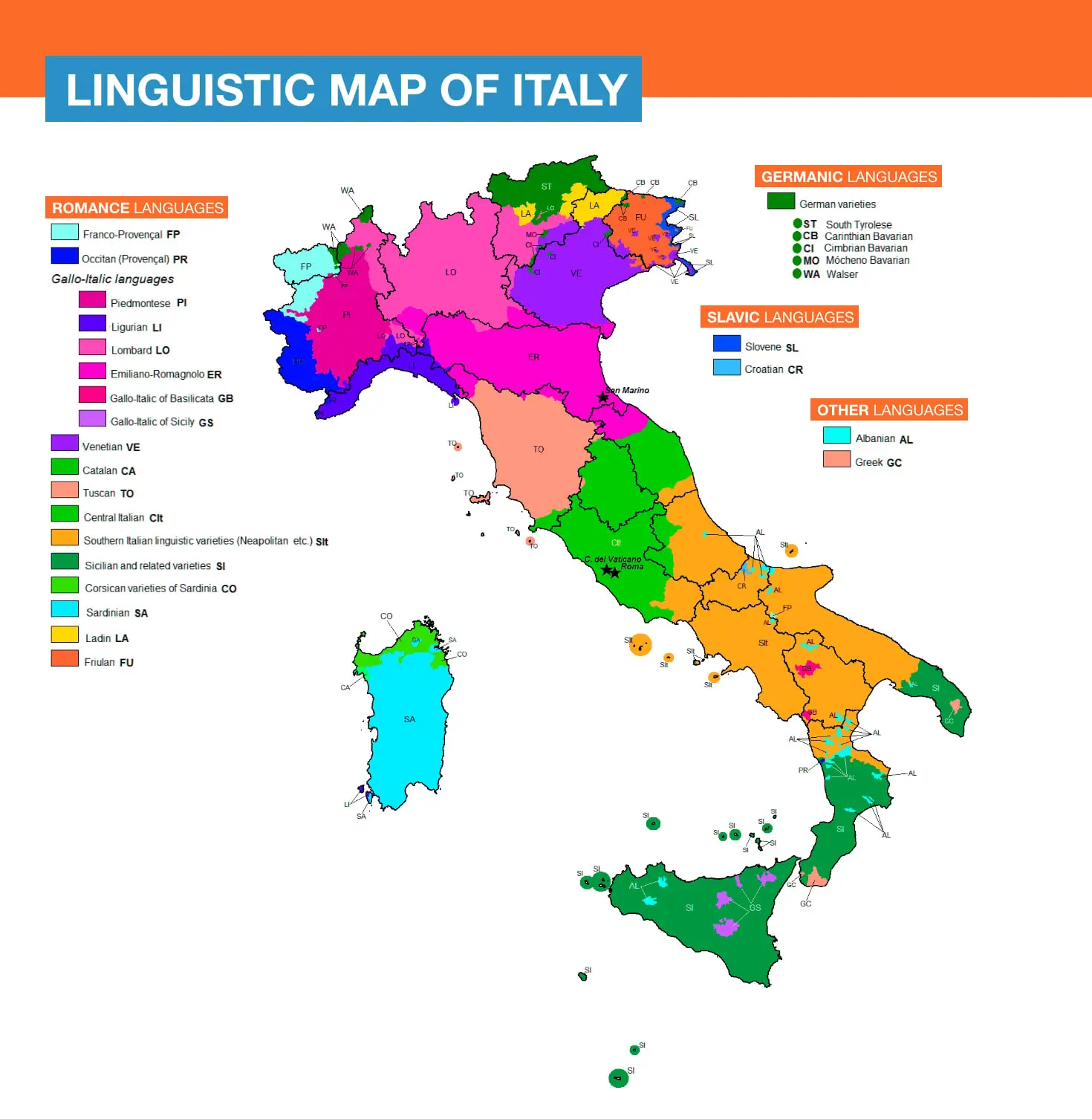
Although most learners start with Standard Italian, there are plenty of dialects and regional variants that you can explore. In fact, before Italy was unified in 1861, only a small group of people spoke what is now known as Standard Italian, and most people in Italy spoke diverse dialects that derived from languages such as Greek, Latin, and Albanian. Although many fell into disuse, there are still many that can be heard across the country, such as:
Want to know more about this topic? Then take a look at Beyond Italian: A Thorough Guide to the Languages of Italy, a fascinating article that covers many more Italian dialects.
In addition to starting a language course, it’s also important that you use your free time to study Italian on your own. Here are some of the most useful resources you can use to work on your skills:
This is one of the first resources you should use, as it will help you find out exactly how good your Italian skills are. Knowing the level of your skills will allow you to look for the right resources and let your teacher know exactly what you need to work on. You can also use them to check your progress or to know what proficiency level you should write on your CV. Although there are many tests out there, we offer a completely FREE Italian Level Test you can do in a few minutes, so before you check out the other resources, go and see how much you score on our test!
If you want to work on your listening skills but you don’t know any native speakers and there are no language exchange events near you, you can start by listening to podcasts in Italian. A great one you can listen to is News in Slow Italian, where you’ll find plenty of episodes where native speakers read the news in Italian, but very slowly, so it’s really easy to understand. You’ll also be able to follow the news by reading along, and you’ll find the translation of most of the words and expressions they use. On top of that, you’ll be able to choose between different levels, so you can use this resource if you’re a complete beginner, an intermediate student or an advanced speaker. Other great podcasts you should check out are Radio Lingua - Coffee Break Italian, which has new episodes every week, ItalianLingQ, where you’ll learn about sports, history, science and more, and LearnItalianPod, where you’ll learn useful things like how to rent a car in Italian or speak on the phone.

(1997)

(1948)

(1960)

(1958)

(2018)

(2017)
There are plenty of amazing Italian YouTubers who create amazing videos every week that you can watch to boost your skills. If you’re interested in learning new vocabulary and developing your listening skills effortlessly, you should check out Impara L’Italiano con Italiano Automatico, a great YouTube channel where you’ll find amazing tips and many videos that feature native speakers talking about different subjects. The great thing about this channel is that all videos have Italian subtitles, so you can follow what the speakers are saying and look up all the new words and expressions you hear. Another channel you should visit is Learn Italian with Lucrezia, where you’ll find many videos of a certified teacher named Lucrezia who can help you understand Italian grammar and learn many interesting things about the language.
The most efficient way to develop your reading skills in Italian is to read as much as possible in the language. If you’re a complete beginner, you can start by reading children’s books in Italian, which have an easy vocabulary that’s not hard to follow. Some books you should consider are Prosciutto e Uova Verdi, one of Dr Seuss's most well-known stories, and Il Grande Libro Delle Fiabe, which contains famous stories like The Three Little Pigs, and Snow White And The Seven Dwarfs in Italian. Once you can understand those, you can move on to other things like the news, magazines, and classic literature.
If you want to find out more interesting facts about Italian, you should check out our blog, which has many articles on the matter. Here are some you might want to read:
Regardless of your language level, here are some useful tips and recommendations you can follow to learn Italian more efficiently.
Some of the most common verbs in Italian are irregular, so the best thing you can do is to learn how to conjugate them as fast as possible. If you do this at the beginning, you’ll save a lot of time, so devote at least fifteen minutes a day to do this and you won’t regret it. Some of the verbs you should start with are:
Unlike English, Italian nouns can be masculine or feminine, and it’s really important to learn the grammatical gender of a noun to use the right article before it, as well as the right adjective. Most nouns that end in -o are masculine, while most that end in -a are feminine. Those that end in -e, however, can be either masculine or feminine, but fortunately there’s a trick to get these right: if a noun ends in -zione, like emozione, which means emotion, or contraddizione, which means contradiction, it’s always feminine. Once you know the grammatical gender of a word, you’ll be able to use the appropriate article before it, so, for example, if you have a feminine singular noun, you use la, as in la casa, which means the house, while if you have a singular masculine noun, you use the article il, as in il treno, which means the train.
As you might know, more than 30 per cent of English words have French origin. French is a Romance language like Italian, so there are many Italian words that you’ll be able to understand thanks to all the words that come from French. Don’t believe us? Take a look at this list of Italian words that you’ll understand without having to look them up:
Although there are many words that you’ll understand in Italian just by speaking English, you need to pay attention to words that look similar but have completely different meanings. Some examples are:
Although you should aim to become a proficient Italian speaker, the smartest thing you can do if you’re about to travel and don’t have much time on your hands is to learn some survival Italian phrases to help you get by more easily. Don’t know where to start? Then take a look at some of the most useful.
| English version | Italian version | |
|---|---|---|
| Getting Around | Where is…?/ Where are…? | Dov’è…?/ Dove sono…? |
| The restaurants | I restoranti | |
| Toilet | Bagno | |
| Bus stop | La fermata dell’autobus | |
| Airport | L’aeroporto | |
| Train station | La stazione | |
| Sightseeing | Where does it open? | Quando si apre? |
| When does it close? | Quando si chiude? | |
| Tickets | Biglietti | |
| Greetings | Hello/Hi | Salve/Ciao |
| Good morning/aftternoon | Buon giorno/pomeriggio | |
| Good evening/night | Buona sera/note | |
| How are you? | Come sta? | |
| Good/So-so/Not bad | Bene/Così-così/Non c’è male | |
| Goodbye | Arrivederci | |
| Emergencies | Help! | Aiuto! |
| I’ve been mugged | Sono stato assalito (m) Sono stata assalita (f) | |
| I lost my passport | Ho perso il mio passaporto | |
| I feel ill | Mi sento male | |
| Ordering food | I would like… | Prendo… |
| The menu, please | Il menu, per favore | |
| What do you recommend? | Che cosa ci consiglia? | |
| I’m allergic to… | Sono allergicor a…(m) Sono allergica a…(f) | |
| I’m vegetarian | Sono vegetariano…(m) Sono vegetariana…(f) | |
| The bill, please | Il conto, per favore | |
| Other useful expressions | How much is it? | Quanto costa? |
| Do you speak English? | Parla Inglese? | |
| I don’t understand | Non capisco | |
| I’m sorry | Mi dispiace | |
| Thank you! | Grazie! | |
| You’re welcome! | Prego! |
Now that you know these phrases, you can rest assured that you’ll get by in Italy without problems. However, if you really want to communicate with natives and improve your experience abroad, the best way to go is to book an Italian course at Language Trainers. If you send us a quick enquiry, we’ll make sure you find the language course that you need, so don’t waste any more time and get started today!

